
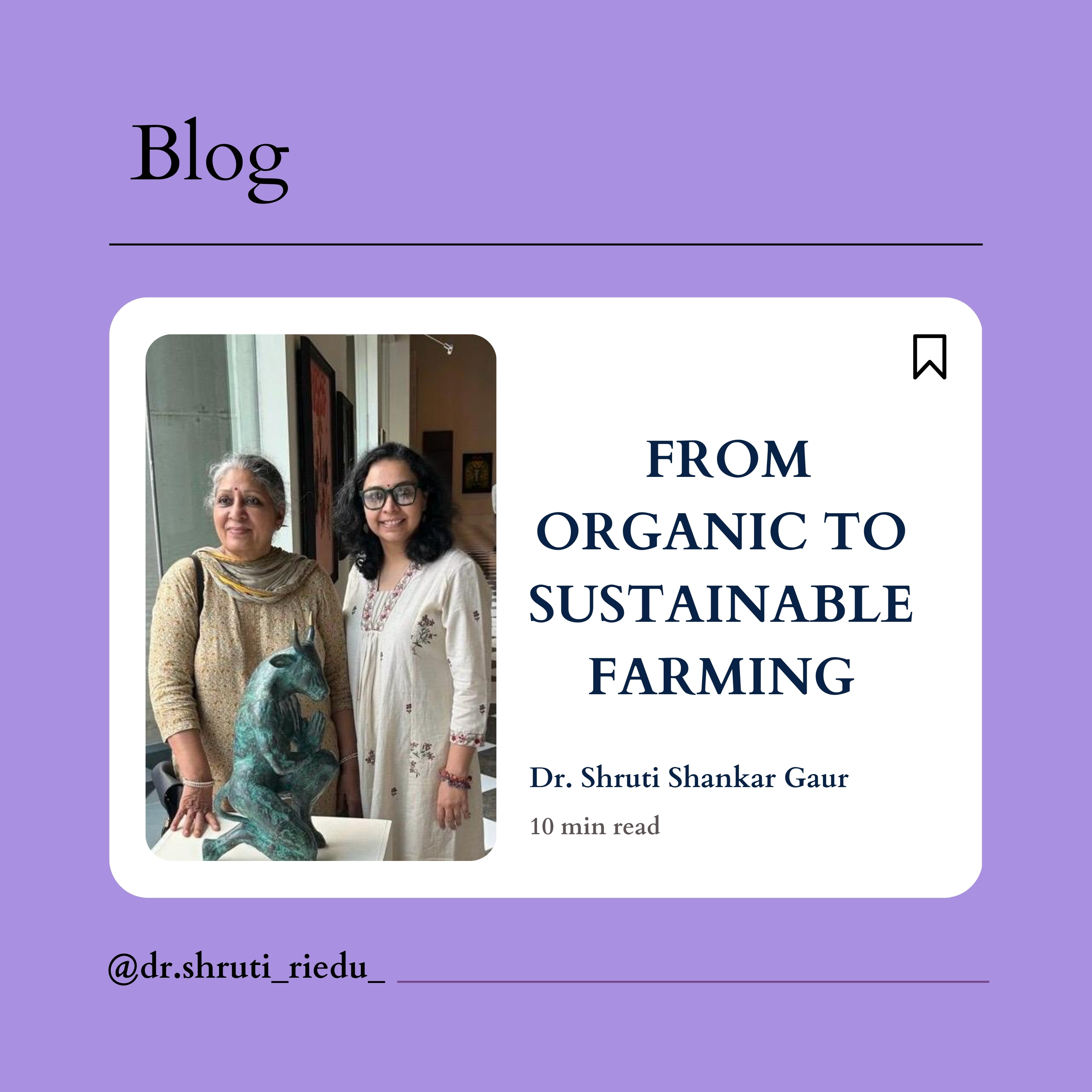

I’m sharing a little secret: we have a healer at home. My mother-in-law is an inquisitive soul, always researching something new—whether it’s herbs, Ayurveda, yoga poses, acupressure, meridians, chakras, or yog nidra… the list is long. I’m sure you can empathize with us—her legitimate guinea pigs.
Yes, we live together. In our family, health isn’t a choice; it’s a mandate. We’re even scared to mention a mild headache because that means inviting a dozen of her potions, which she will promptly throw into our mouths. None of us dares to say no to her. The best way to avoid it is by staying healthy, to prevent her wrath.

But this blog isn’t about her experiments on us. It’s about her experiment with organic farming and the lessons we’ve learned from the experience. The journey began eight years ago when we moved into our current home. We were all excited, and my father-in-law ensured everyone’s wishes were fulfilled. I needed a library, my husband a badminton court, and my children a swimming pool. Phew!
My mother-in-law wanted solar panels and an organic garden in the backyard. She was enthusiastic, researching ways to create her own compost and experimenting with different organic farming methods. We often teased her that her focus was more on the garden than choosing the wardrobe style, bathroom tiles, or even the paint for her room.
It took about six months to create the garden she had envisioned. My mother-in-law’s vision was planned and executed by my father-in-law. The garden was divided into sections: one for grass where we could enjoy our morning and evening tea overlooking the flower beds. Trees were planted in an entire row and a larger section was created for the vegetables. They took it as a mission to create an organic farm, nurturing it with love and care.
Then began the WAR—a territorial battle between my in-laws and every animal, insect, bug, bacteria, and fungi. They would sow seeds in the morning, only to find squirrels and birds had devoured them by evening. New nets, barricades, and even a scarecrow were installed to keep the intruders away. But can one really fight nature? We had the audacity to think we could!
I saw tears in her eyes when the little buds she had nurtured were eaten by some animal. The pattern was repeated with every vegetable and fruit that ever grew. She would eagerly wait for them to ripen, only to find that some creature had feasted on them first. One time, the leaves had caught a fungal infection. She dived into deep research and concocted smelly potions that scared off not just the pests but also us! Every morning, she’d check the garden to see if her magic potions worked. Some days they did, other days they didn’t.
The first year’s harvest was low. Her dream of growing enough vegetables to stop buying from the market had crumbled. While my mother-in-law battled hard, I quietly observed, focusing my energy on raising my daughters and wrapping up my Ph.D.
Almost two years after we had moved in, she finally surrendered.
“This organic farming concept is rubbish. No wonder farmers use so many pesticides and insecticides,” she said.
“But Ma, you always said those chemicals harm us too,” I reminded her.
She didn’t have the heart to kill animals, no matter how small. She wanted to grow food in peace, but it felt like she was constantly fighting. What was supposed to be her place of bliss had turned into a source of constant stress.
Just then, my husband opened the garden camera app. What we saw, took a moment for us to process. There was a party on the go in ‘our’ garden. With us retreating indoors, nature had taken over. A mongoose family roamed sniffing and nibbling the harvest(now we knew where all the potatoes, carrots, radish, spinach, and corn were going), squirrels raced up and down the fence, strange birds perched on the garden chairs, and butterflies with fluorescent wings fluttered around the flowers. We heard the birds chirping and fighting while bathing in the water bowl Ma had placed in the garden. It was our own Amazon in the backyard!
A strange smile spread across her face. The exasperation she had felt a moment ago disappeared, she had found her peace. Six years have passed since the “war” ended. We realized we’re a part of nature, not its owners. The garden still remains our most cherished spot, where we sip our morning tea and invite friends and family; celebrate Holi, Diwali and Christmas. However, If someone tries to sell me organic farming products, I just smile. My understanding is that (and I may be wrong) organic farming isn’t a commercially viable model.
Let me share the lifestyle we’ve adopted:
1. We began with organic farming but eventually transitioned to sustainable farming. We still don’t use pesticides or insecticides. The harvest is still low, but we are no longer the sole owners with a hoarding mentality.
2. The harvest belongs to everyone—humans, birds, animals. Every season, we welcome new species. During guava season, different kinds of parrots visit; mango flowering attracts koels. We’ve spotted unique birds and butterflies of various sizes, including one tiny bird no bigger than my thumb, twitching its tail as it feeds.
3. We still compost all our kitchen scraps. My mother-in-law is often busy whipping up strange potions to nurture her beloved garden.
4. One corner of the garden has been left wild. We call it a “jungle,” where desired plants outgrow the desired shape and undesired, unwanted ‘weeds’ also flourish naturally. After all, what is a weed? But a plant labeled so whose benefit/ use is yet to be discovered by the ‘man’.
#organic #sustainable #farming #lifelessons #experiences #family #nature


Leave a Reply